- The Daily Vroom
- Posts
- The Hardest Part of Selling a Car Has Nothing to Do With Price
The Hardest Part of Selling a Car Has Nothing to Do With Price
PLUS: A museum-grade Mustang, and camper builds that skip the fluff and solve real problems

Sam Gold
January 08, 2026
The Daily Vroom
Selling a Car Isn’t Hard. Deciding How to Sell It Is.

Most people think selling a car starts with a number.
What’s it worth?
In reality, that’s about 10 percent of the work.
The real effort begins the moment you try to answer a much harder question.
How should I actually sell it?
Because despite what the internet might suggest, there is no single “market.” There are dozens of them, all behaving differently, all attracting different buyers, and all rewarding different types of sellers.
Plenty of cars still trade privately. Among friends. Through clubs. Quietly. That’s often the cleanest outcome and, in many cases, the most rational one. No fees. No commentary. No public clock counting down. If you’re well networked, patient, and realistic, it can work extremely well.
But step outside that circle and the landscape changes fast.
Now you’re choosing between eBay, Craigslist, Facebook Marketplace, dealer consignment, online auction platforms, or a live auction house. Each comes with its own audience, norms, risks, and expectations. And none of them tell you, clearly, whether your car actually belongs there.
That’s where the uncertainty starts.
Most sellers arrive with a number in mind. Then the platform responds with a different one. Lower. Almost always lower. Sometimes by a little. Sometimes by a lot.
And that’s when the dance begins.
Back and forth on price. On format. On whether a reserve makes sense. On whether the market is “there.” Sellers feel they’re defending the car. Platforms are managing risk and reputation. Both are usually acting rationally. It just doesn’t feel that way from the other side.
Even once that hurdle is cleared, the real work hasn’t started yet.
Photos. Videos. Cold starts. Underbody shots. Service records. Ownership history. Modification explanations. Paintwork disclosures. Compression numbers. Dyno sheets. Stories that matter and stories that don’t.
Every platform has its own unspoken checklist. Miss something and you’ll hear about it in the comments. Publicly.
Then come the technical questions. Some are thoughtful. Some are repetitive. Some are irrelevant. All of them require time, patience, and a steady hand. Silence can hurt momentum. Over-explaining can backfire. There’s an art to it, and most sellers learn it in real time.
Timing adds another layer of risk.
Some platforms let you choose when your car goes live. Others don’t. You might wait weeks. Or get slotted into a window you didn’t expect. And occasionally, you’ll discover a nearly identical car is running at the same time, competing for the same bidders.
None of this shows up in a valuation.
Yet all of it affects outcomes.
This is why the same car can sell easily in one context and struggle in another. It’s not always the car. It’s the fit between the car, the audience, the timing, and the format.
It’s also why professional consignors and power sellers exist. Not because selling is impossible, but because managing all of these variables at once is exhausting. Especially when real money is on the line.
Here’s the part worth sitting with.
Most sellers don’t fail because they priced their car wrong.
They struggle because they didn’t know which decisions actually mattered.
Where to list. How to present. When to launch. How to engage. When to adjust expectations. When to walk away and try again.
Those are not obvious questions. And they’re rarely answered clearly.
As the market continues to fragment, the advantage won’t belong to the loudest platform or the biggest audience. It will belong to the sellers who understand the process before they enter it.
Because selling a car today isn’t about finding buyers.
It’s about navigating choices.
When selling a car, what matters most to you? |

Sale of the Day

This one is a great reminder that the market can still be rational when the car is honest.
A 1995 BMW 540i with a six-speed manual, V8 power, and just over 100k miles sold for $9,700. No drama. No late spike. Just steady, informed bidding to a number that made sense.
And that’s exactly why it stood out. The E34 540i has long lived in the shadow of the M5. Same chassis. Same presence. Nearly the same performance on the street. Far less complexity and far more parts availability. Enthusiasts know this, even if the broader market sometimes forgets.
This auction showed that the message is finally landing. The discussion wasn’t about hype or speculation. It was about drivetrains, long-term reliability, and real-world ownership. The M60 V8’s reputation got the nuanced treatment it deserves. Yes, Nikasil comes up. No, it isn’t the boogeyman it once was. Maintenance history mattered more than casting numbers, and buyers clearly understood that.
Condition played its role too. This wasn’t a cosmetic darling. The flaws were visible. The interior showed wear. The suspension needed attention. And instead of scaring bidders away, it framed the car properly. This was a driver. A usable modern classic. Something you improve over time, not park under lights.
That’s why the price makes sense. At under $10k, the winner didn’t buy a project or a gamble. They bought one of the best-balanced BMW sedans of the era, with three pedals, eight cylinders, and just enough imperfections to remove the fear of using it.
Nearly an M5. Easier to live with. Easier to maintain. Still deeply engaging.

No Reserve Auctions To Keep An Eye On

This is a good example of why clean OBS trucks are getting more attention lately.
Not because they’re rare in theory, but because so few survived without being altered.
A 27k-mile 1992 F-150 already stands out. Add the five-speed manual, the 5.0 EFI V8, and a Flareside bed and you’re looking at a configuration that quietly disappeared as trucks became bigger, more automatic, and more complicated.
Most trucks from this era were worked hard or modified early. Manuals faded away. Short beds took abuse. Flaresides were often ignored. What remains today is usually changed, worn, or both.
This one hasn’t been. The 5.0 V8 hits a useful middle ground. Fuel injection makes it easy to live with, but it still feels mechanical and straightforward. No tuning rituals. No learning curve. Just drive it.
The Flareside matters too. It wasn’t the popular choice when new, which makes it more distinctive now. It reflects a brief design moment that didn’t last long in Ford’s lineup.
What really strengthens the case here is restraint. Factory colors. Stock interior. Original look. In the current truck market, originality tends to age better than upgrades.
And despite the attention these trucks are getting, this is still a usable vehicle. Four-wheel drive. Real gearing. Air conditioning. Cruise control. It’s not a museum piece.
The takeaway is simple. As interest grows, the trucks that hold up best are the ones that stayed closest to how they left the factory.
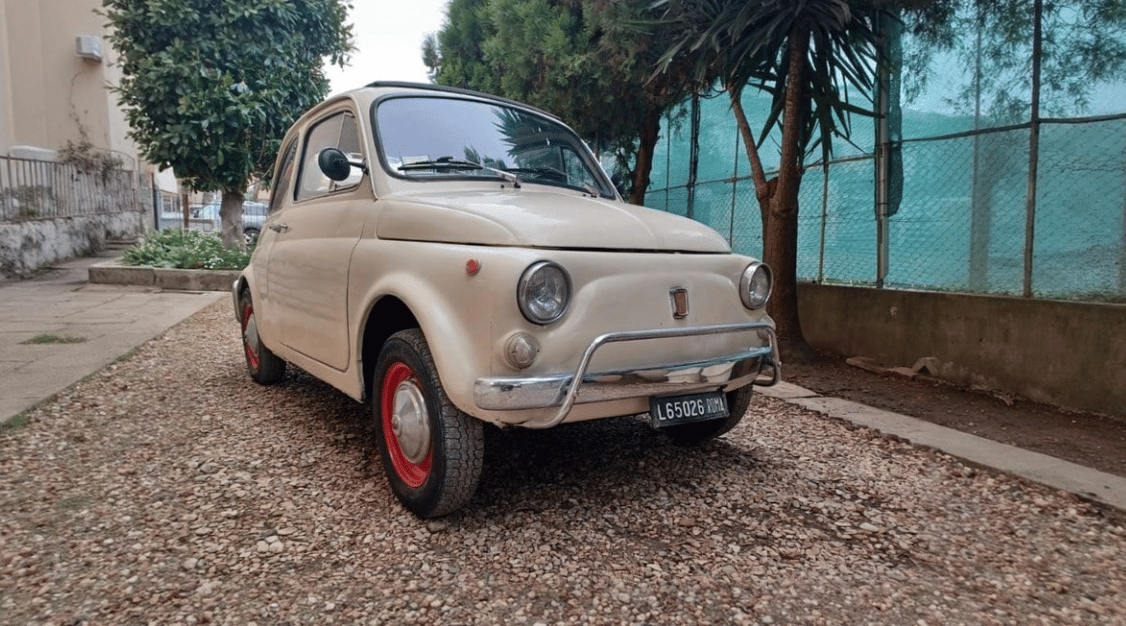
This isn’t our typical feature here, but the market isn’t just about big numbers or headline cars. There’s room for everything, including small classics like this 1973 Fiat 500 R.
The 500 R was the final version of the original Cinquecento, built just before the 126. It kept the familiar look but gained the larger 594cc engine, making it slightly more usable while marking the end of the line.
This example reflects that middle ground. It’s been restored, fitted with period-correct 500 L wheels and bumpers, and then stored for years. It looks charming, but it’s not factory-correct, not ASI-certified, and will need recommissioning before regular use.
With small European classics, originality often matters more than rarity, and long-term storage usually means future work. Cars like this can be rewarding if you understand the trade-offs going in.
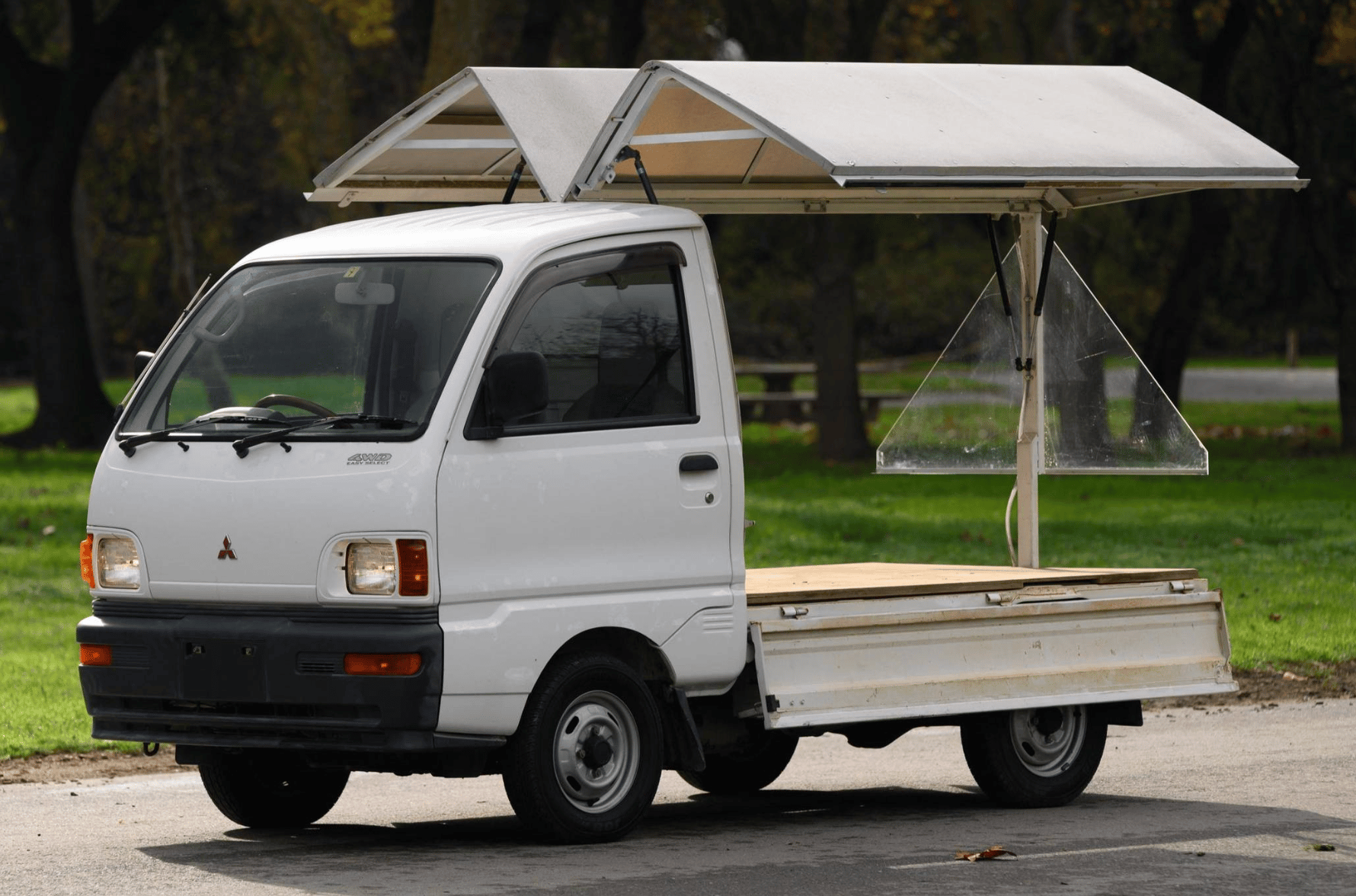
This isn’t our typical feature either, but it’s a good example of why kei trucks keep pulling people in.
On the surface, this 1997 Mitsubishi Minicab TL is pure novelty. Tiny proportions. Right-hand drive. A custom gullwing bed cover that instantly steals the show. It’s the kind of vehicle that makes people smile before they ask a single practical question.
Look a little closer, and there’s more going on.
This one checks boxes that aren’t common even in the kei world. Four-wheel drive. An automatic transmission. Air conditioning. Low miles. And the importing work is already done, with a U.S. title in hand. That combination explains the attention.
But this is also where the lesson comes in.
Kei trucks live at the intersection of fun and friction. They’re slow, loud, and not built for long distances. Registration and emissions rules vary wildly by state. In places like California, compliance can cost more than the truck itself. Ignore that, and the novelty wears off quickly.
When they work, though, they really work.
As town vehicles, property runabouts, or pure conversation pieces, kei trucks offer something most modern vehicles can’t: charm without pretense. This one just happens to do it with gullwing doors.
Know the rules. Know the limits. Then enjoy it for exactly what it is.
Enjoying The Daily Vroom?
Pay it forward by sharing this newsletter with an automotive aficionado in your circles. Your endorsement allows us to accelerate our growth.
Send them to thedailyvroom.com to subscribe for free.
Reply