- The Daily Vroom
- Posts
- When An Auction Isn’t Really An Auction
When An Auction Isn’t Really An Auction
PLUS: he $60K SL65, how Kennan, (from Cars & Bids) content, and confidence turned a $30K car into a headline result

Sam Gold
March 20, 2026
The Daily Vroom
Good morning Vroomers,
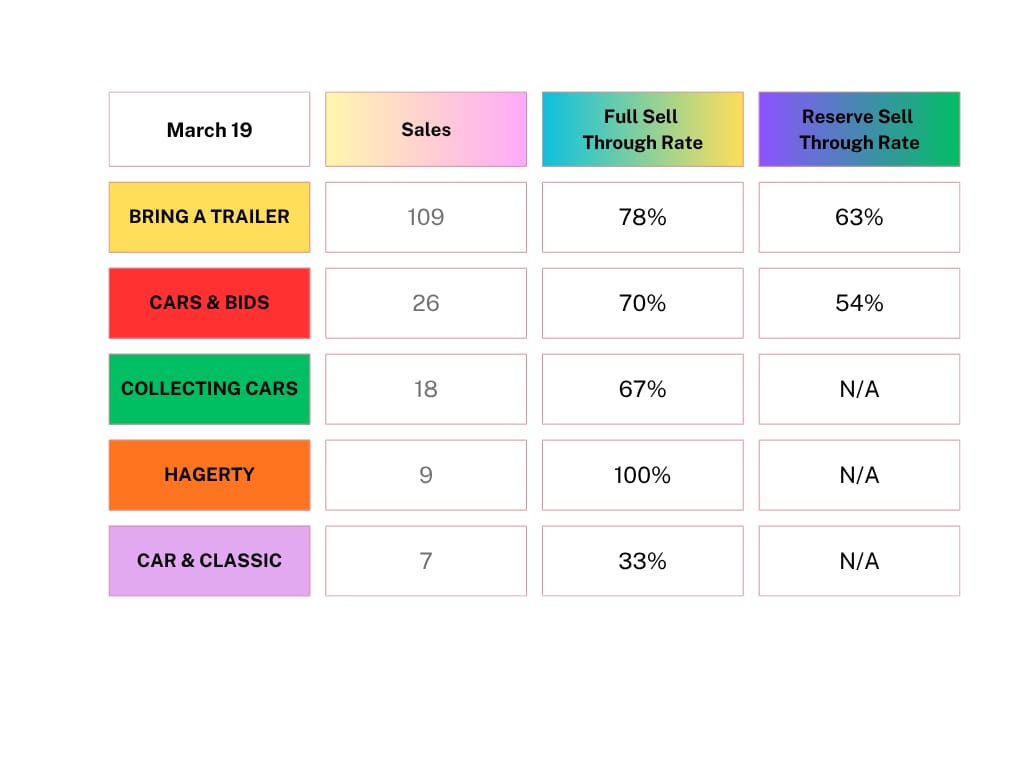
Let’s get straight into it. It’s been a quieter week at the top end, with the average sale price sitting at $41,300 so far, just below the $44K average we’ve seen across the month. Not a huge drop, but noticeable.
Heading into the weekend, all eyes are on Collector’s Edition 2 wrapping up, and I’m especially curious to see where the SP2 Monza lands. That’s the kind of result that can shift the tone pretty quickly.
Behind the scenes, there’s still a lot going on. Platforms are making moves, whether it’s new hires, new strategies, or experimenting with different ways to drive transactions. Everyone is trying to stand out, and it’s starting to show.
Below, we’re featuring one of those new ideas coming out of SOMO. As always, I’m interested to hear what you think.
And if you’re enjoying TDV, share it with a friend or two. Your friends can sign up for free at thedailyvroom.com

MARKET LEADERBOARD
💰 The figures shared below don’t count any other sales such as car seats, memorabilia etc… All online auction sites are analyzed to put this leaderboard together.
I only include websites that have sold 5+ vehicles in the chart below.

When an auction isn’t really an auction
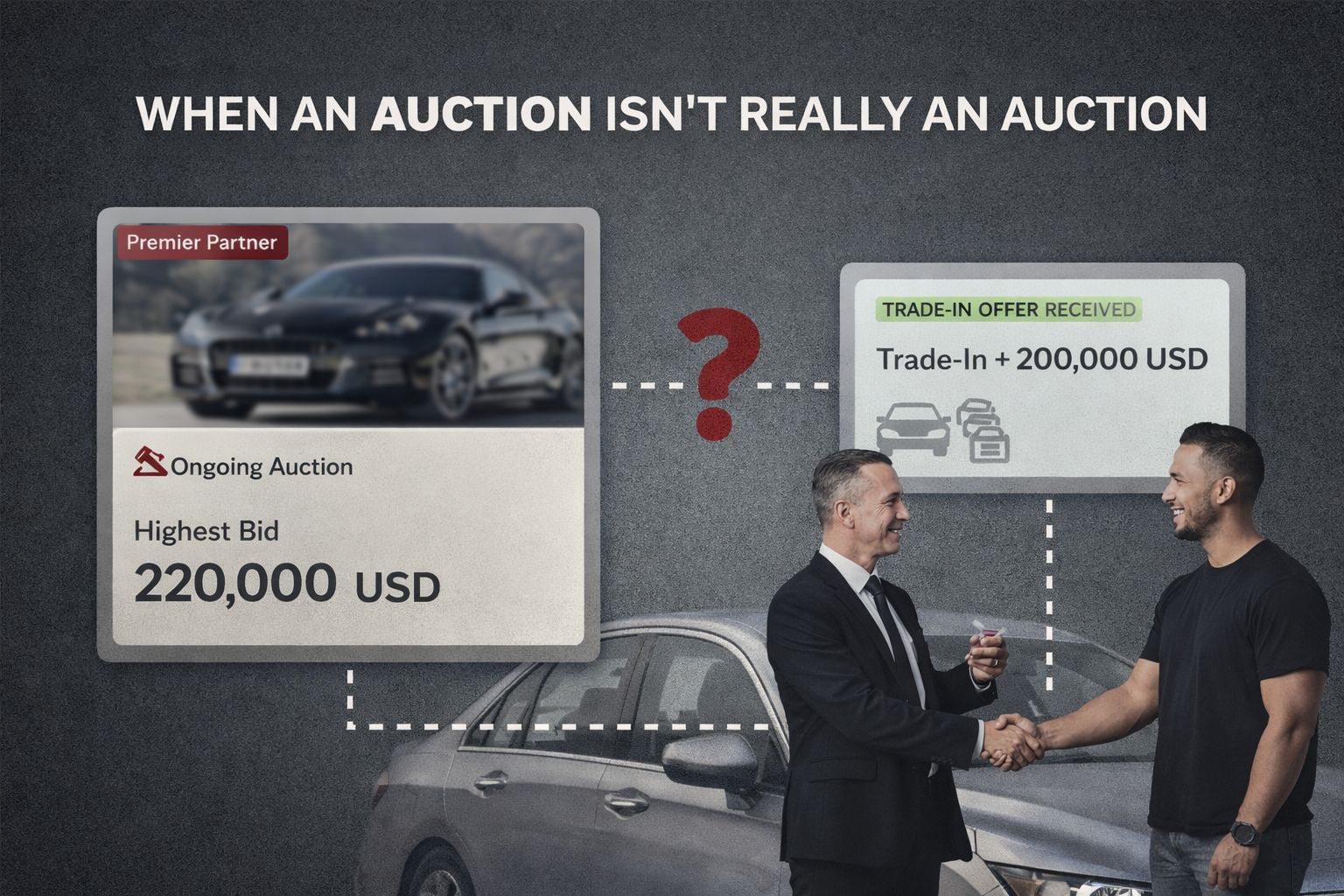
As I was scrolling through some of the auctions on SOMO, something new caught my eye that I hadn’t seen before, and it took me a second to figure out what I was actually looking at. Alongside the auction, there was a trade-in offer tied to one of their Premier Partners, which effectively means the seller isn’t just running a normal auction anymore, they also have the option to complete a deal that includes trading their car in as part of the transaction.
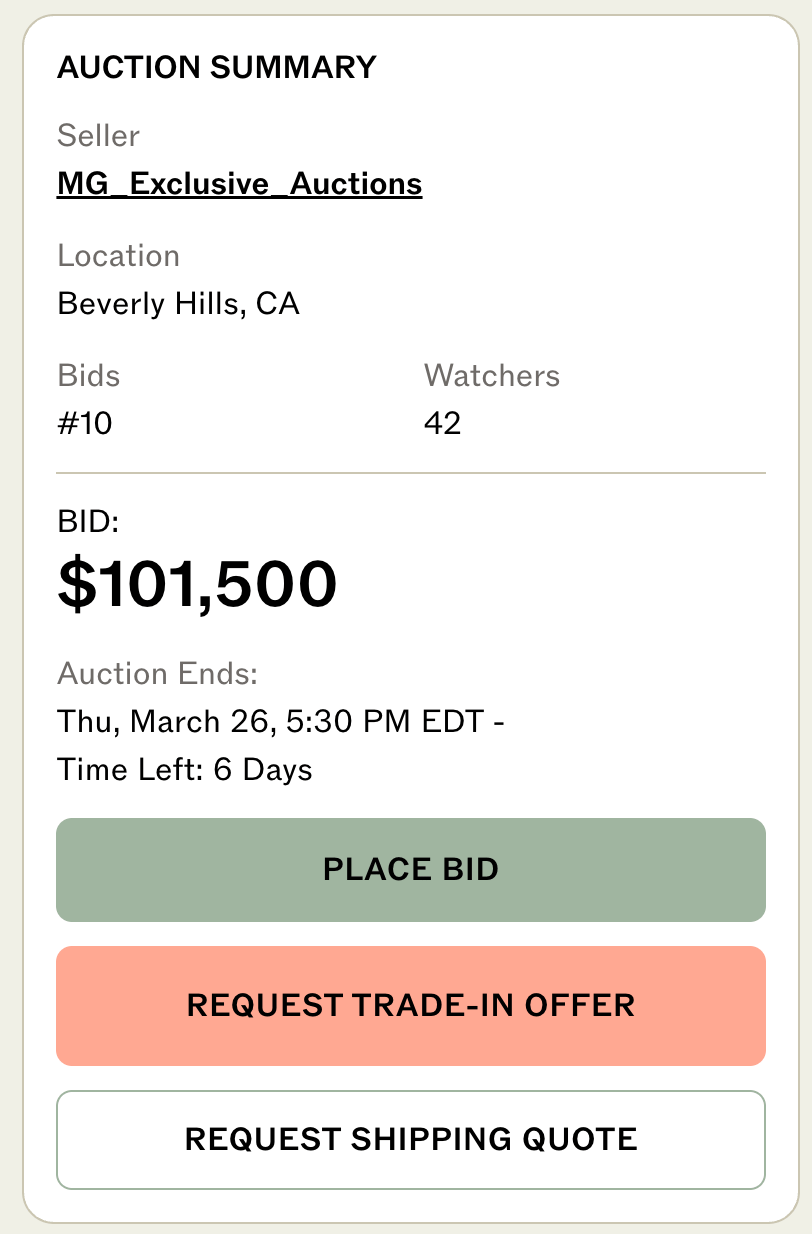
On paper, I actually like the idea. This is exactly the kind of thing that brings real-world car buying into the online space, and in the real world, trade-ins are a huge part of how deals get done. If anything, most transactions aren’t just clean cash deals, they’re structured, negotiated, and involve multiple moving pieces.
So the concept itself makes sense. Where I start to question it is how that concept fits inside an auction environment.
Because auctions work precisely because they’re simple and, more importantly, they feel fair. You see the bids, you understand where the number is, and you know exactly what you need to do if you want to win. Even in a reserve auction, where the seller has the final say, the playing field still feels level because everyone is reacting to the same visible information.
What I couldn’t figure out, and still haven’t seen explained anywhere clearly, is how that trade-in offer actually interacts with the auction itself?
If I’m bidding on a car and there’s a trade-in being considered, how is that reflected, if at all? If someone is effectively bringing $100K of value through a trade and the auction is sitting at $200K, is that showing up anywhere in the bidding, does it get combined in some way, or is it just being evaluated separately in the background?
Right now, it looks like it’s being handled completely outside of the auction. And that’s where the issue is.
Not that trade-ins exist, but that they don’t seem to be part of the same system as the bidding. From the outside, the auction still looks completely normal, which means as a bidder you’re operating under the assumption that what you’re seeing is the full picture, when in reality there may be another offer sitting there that can influence the outcome and you have no visibility into it.
That doesn’t feel like an equal playing field. If I’m the highest bidder and then find out the deal went another way because of a trade-in offer that I never saw or couldn’t react to, I’m gonna be very unhappy, regardless of whether it made sense for the seller.
That’s where I think this may be a better fit in a different environment. In a buy-it-now listing this works perfectly. Multiple deal structures, trade-ins, bundled offers, all of that belongs there because it’s already understood that you’re negotiating a full transaction, not competing in a transparent bidding process.
An auction is different. It relies on clarity, visibility, and the idea that everyone is competing on the same terms, and once you introduce something that sits outside of that, the burden shifts to the platform to explain exactly how it works and how fairness is maintained.
Right now, that explanation just isn’t there. The current language still frames auctions in the traditional way, highest bidder wins in a no reserve setting, seller decides in a reserve auction, which is fine when the auction is the only mechanism in play, but becomes incomplete the moment there’s another path to a deal that isn’t being shown.
If this is something SOMO wants to expand, they’re going to need to do a much better job of explaining how trade-in offers are handled, when they come into play, how they’re evaluated against bids, and how bidders should think about them when participating.
Because the idea itself is strong. But in an auction environment, if it’s not transparent and it doesn’t feel fair, it’s going to create more friction than it solves.
What do you think?
What should determine the winner in auctions? |
Sale of the Day

This is one of those auctions where everything just came together.
A 2007 Mercedes-Benz SL65 AMG just sold for $60,000, and that’s a big number for an R230 with 75K miles. Not long ago, these were $30K cars, and even today most examples don’t get close to this level.
But this wasn’t just about the car. Yes, on paper it’s ridiculous. Twin-turbo V12, 738 lb-ft of torque, one of the most over-the-top performance bargains out there. We’ve seen plenty of SL65s come through though, and they don’t usually land here.
What made this one different was everything around it. Start with the presentation. Nearly 400 photos, detailed service history, real transparency around the flaws. That alone puts it ahead of most listings.
Then the content. Multiple videos, Doug review, Kennan review, full walkarounds, proper context and a ton more. By the time the auction was closing, bidders weren’t guessing, they felt like they knew exactly what they were getting.
And then there’s Kennan. He just comes across incredibly well. If you’ve listened to This Car Pod, you’ll know what I mean. Easygoing, honest, never trying too hard. That builds trust before a single bid is placed.
His YouTube channel is also pretty underrated. It’s not overproduced or chasing clicks, just solid content that actually brings you closer to the car and the ownership experience.
And more than anything, he just seems like a genuinely good guy. That kind of reputation doesn’t show up in the specs, but it absolutely shows up in the final number.
Put it all together, no reserve, strong engagement, the right audience, and you get real momentum. People leaning in, not sitting back. $60K isn’t just a good result. It’s a reminder that the best auctions sometimes aren’t just about the car, they’re about confidence, story, and who’s behind it. This one had all three.
.Enjoying The Daily Vroom?
Pay it forward by sharing this newsletter with an automotive aficionado in your circles. Your endorsement allows us to accelerate our growth.
Send them to thedailyvroom.com to subscribe for free.
Reply